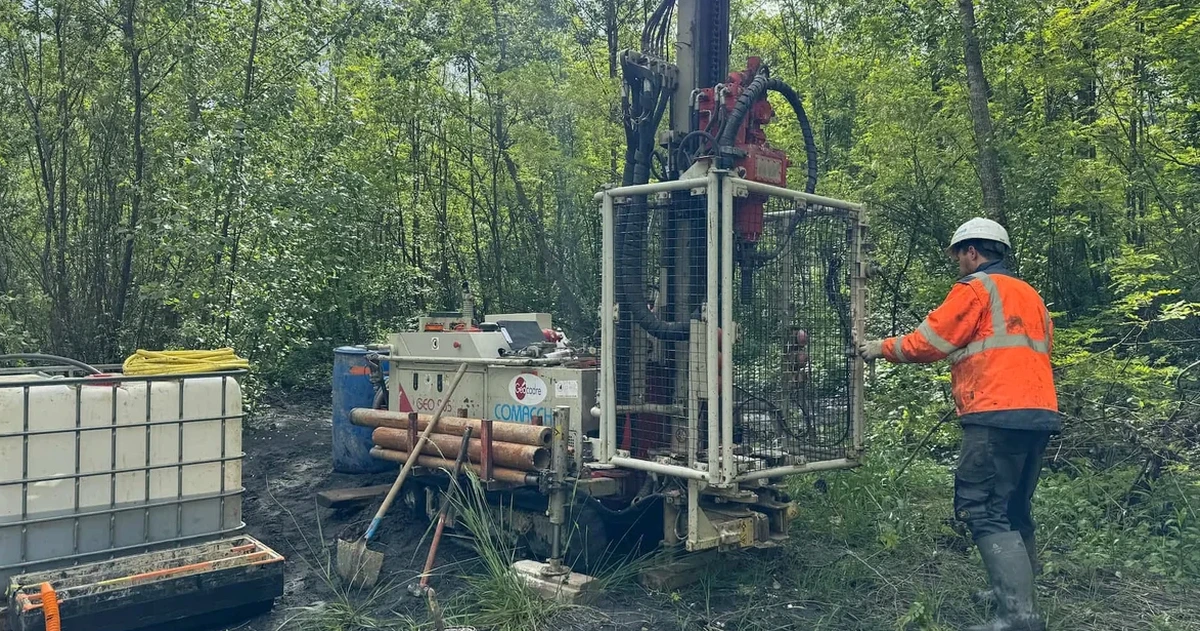
The most common mistake we see in Barnsley is treating the whole town as one uniform geology. A site near the sandstone outcrops of Locke Park behaves nothing like one down by the River Dearne, where soft alluvium and old mine workings create a completely different risk profile. Contractors who skip a proper soil mechanics study often discover this when the excavator hits running sand or an unrecorded backfilled shaft. The cost to stop work, redesign footings, and import engineered fill dwarfs what a targeted investigation would have cost. Our lab helps you avoid that spiral. We combine routine classification with advanced strength testing, always tailored to the specific ground conditions of your Barnsley plot. For sites with deep variable strata, we often pair the study with CPT testing to get a continuous strength profile without disturbing the sample structure.
Barnsley's ground does not read textbooks. A soil mechanics study bridges the gap between regional maps and what your excavator actually finds.
Local ground factors
BS EN 1997-1:2004 (Eurocode 7) mandates a ground investigation for every structure, but in Barnsley the risk of skipping it is amplified by the legacy of deep coal mining. The Coal Authority records over 150 mine entries within the borough boundary. A soil mechanics study that stops at 3 metres misses the colliery spoil, fractured roof rock, or flooded voids that can cause catastrophic differential settlement. We correlate borehole logs with historical abandonment plans, then run consolidated-undrained triaxial tests to see how the soil behaves under long-term loading. In one recent project near Worsbrough, a routine site turned up a 4-metre band of completely weathered mudstone that had been mapped as competent rock. Without the lab data, the piling design would have failed. That kind of discovery is not bad luck; it is just Barnsley geology doing what it does. Good investigation catches it early.
Quick answers
How much does a soil mechanics study cost for a typical Barnsley residential plot?
For a standard residential project in Barnsley, a soil mechanics study including drilling, sampling, and lab testing typically falls between £2,300 and £4,120. The final figure depends on access conditions, depth of investigation, and whether you need advanced triaxial or consolidation tests.
Do I really need a full study if I am just building a single house extension?
Yes, especially in Barnsley. Even a small extension can sit over a backfilled mineshaft or a pocket of soft alluvium that the original house missed. A focused study with a couple of boreholes gives your building control officer the data they need and protects you from future subsidence claims.
How long does the lab testing phase take after the site work?
Routine classification and shear strength tests usually take 7 to 10 working days. Consolidation and triaxial suites need up to three weeks because of the staged loading and pore pressure equalisation required. We always schedule the critical path tests first so your design programme stays on track.