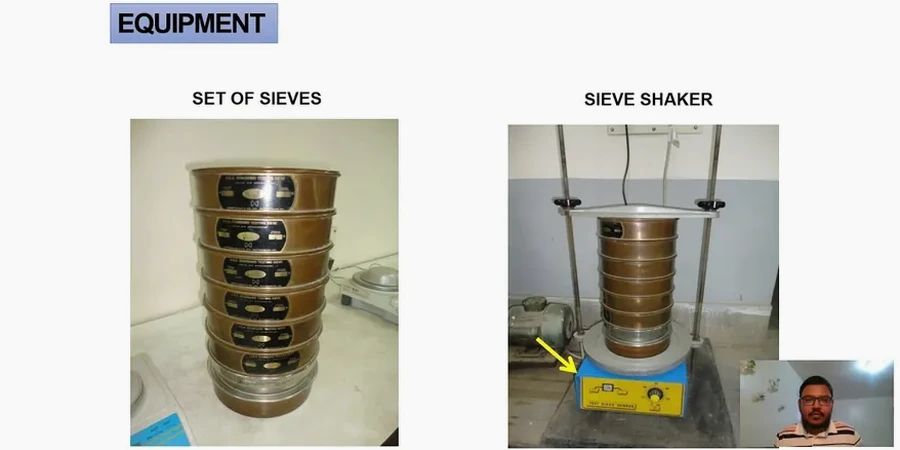
The soil profile varies dramatically across Barnsley. From the coarse sandstone-derived head deposits on the slopes above Pogmoor to the soft alluvial silts in the Dearne Valley floodplain, two sites just a mile apart can behave completely differently. A straightforward sieve analysis might suffice for the sandy brash near the M1 corridor, but the laminated clays found towards Lundwood demand the full hydrometer treatment to capture the fines fraction. Getting the particle size distribution right here is not a box-ticking exercise. It dictates everything from earthworks specification to drainage design. Before finalising a foundation scheme, we often recommend complementing the particle size curve with Atterberg limits to establish plasticity characteristics when the hydrometer reveals a significant clay fraction.
A hydrometer analysis in Barnsley's alluvial silts routinely reveals clay fractions below 15%, yet these fines govern the soil's entire mechanical behaviour.
Local ground factors
A site investigation near the River Dearne underestimated the silt content in a proposed warehouse footprint. The initial contractor relied on a basic visual classification and a quick sieve stack, missing the 35% silt fraction entirely. The designed granular sub-base failed within two seasons. Pumping from the fines-saturated formation caused differential settlement across the slab, cracking partition walls and jamming overhead doors. A full hydrometer analysis after the fact identified the gap-graded nature of the deposit. The remediation involved a thicker capping layer and perimeter drainage, costs that would have been avoided with a proper grading curve from the start. When the <63-micron fraction exceeds 12%, as it often does in Barnsley's valley bottoms, skipping the hydrometer is a gamble with the long-term serviceability of the structure.
Quick answers
What is the typical cost for a grain size analysis in Barnsley?
A combined sieve and hydrometer test generally ranges from £90 to £170 per sample, depending on the number of sieve sizes requested and whether pre-treatment for organics or carbonates is needed. Bulk pricing applies for projects with more than ten samples.
How long does the hydrometer portion of the test take?
The sedimentation phase requires readings over a minimum 24-hour period, and often extends to 72 hours for Barnsley's glacial lake clays where the finest particles settle very slowly. The full report, including the coarse sieve fraction, is typically ready within five working days.
Why is wet sieving specified instead of dry sieving?
Dry sieving fails on cohesive soils. The clay and silt particles bind to the sand and gravel, artificially inflating the coarse fraction. Wet washing through a 63-micron sieve is mandatory under BS 5930 when the fines content exceeds 10%, a condition met by most of Barnsley's natural ground.
Can the grading curve help assess frost susceptibility?
Yes. A frost-susceptible soil is one where more than 10% of particles pass the 75-micron sieve, or more than 3% pass the 20-micron sieve. The hydrometer analysis provides the data needed to make this determination for road subgrades and shallow foundations in exposed areas of Barnsley.