Together, we solve the challenges of tomorrow.
LEARN MORE →Underground excavations in Barnsley encompass the full engineering discipline of creating stable, safe subterranean openings within the region's complex ground conditions. This category covers everything from initial ground investigation and geotechnical analysis through to detailed design, construction, and long-term monitoring of tunnels, shafts, basements, and deep service trenches. For a town with a proud mining heritage now transitioning into modern infrastructure and urban regeneration, understanding how to safely excavate below ground is not just a technical requirement but a fundamental part of sustainable development. The legacy of historical shallow workings, combined with natural ground variability, means that every underground project here demands a rigorous, site-specific approach informed by both local experience and national standards.
Barnsley sits atop the Pennine Coal Measures Group, a Carboniferous succession of interbedded sandstones, siltstones, mudstones, and historically exploited coal seams. This geological inheritance creates a dual challenge: the natural engineering properties of weak rock and overlying glacial till, plus the unpredictability of abandoned mine entries, collapsed pillars, and undocumented shallow workings. Groundwater regimes are often perched within fractured sandstones or flow along old mine roadways, adding hydrogeological complexity to any excavation. Successful underground construction here typically requires a phased approach, beginning with geotechnical analysis for soft soil tunnels to characterise the often highly variable drift deposits and weathered rockhead, before progressing to detailed design.
All underground excavation work in Barnsley falls under the UK's robust regulatory framework, principally the Construction (Design and Management) Regulations 2015 (CDM 2015), which place duties on clients, designers, and contractors to manage health and safety risks throughout a project's lifecycle. The primary technical standard is BS EN 1997 (Eurocode 7) for geotechnical design, requiring a limit state approach to verify safety against ultimate and serviceability conditions. For temporary works, BS 5975 provides specific guidance on falsework and excavation support. Crucially, given the mining legacy, the Coal Authority's permitting system applies to any excavation that intersects or approaches coal seams or former workings, requiring a permit and often a specialist mine entry investigation. These regulations collectively mandate a level of care that makes professional geotechnical design of deep excavations essential for compliance.
The types of projects requiring underground excavation expertise in Barnsley are diverse. Urban regeneration schemes frequently involve deep basements and underground parking beneath mixed-use developments, where retaining wall design must account for adjacent historic structures and buried services. Infrastructure upgrades by Yorkshire Water or National Grid often require trenchless techniques and reception shafts through challenging ground. Road and rail improvements, such as those on the A628 corridor or local rail networks, can involve cut-and-cover tunnels or underpasses. Even rural projects like farm reservoirs or sustainable drainage systems may need shallow excavations where old mine workings pose a collapse risk. Across all these, continuous geotechnical excavation monitoring during construction provides the feedback loop that confirms design assumptions and triggers contingency measures if ground movements exceed predictions. This integrated cycle of investigation, design, and observation is what defines best practice in the region.
The principal risks include encountering unrecorded mine shafts and adits, collapse of shallow pillar-and-stall workings, and groundwater ingress through fractured strata. Gas emissions from old workings and differential settlement above abandoned voids also pose hazards. A thorough Coal Authority mining report and phased ground investigation are essential to identify and mitigate these legacy risks before any excavation begins.
Yes, if your excavation intersects or is within proximity to coal seams or former mine workings, you will likely need a permit from the Coal Authority under the Coal Industry Act 1994. The permit process requires submission of method statements and design details showing how you will safely manage the mining legacy. Early engagement with the Authority is recommended to avoid programme delays.
Open cut excavation is made from the surface downwards, typically with supported or battered sides, and is designed primarily against base heave and slope instability. Underground excavation involves creating a roofed void, requiring design for crown stability, face support, and long-term lining loads. The latter demands more complex analysis of arching effects and three-dimensional stress redistribution, particularly in weak rock.
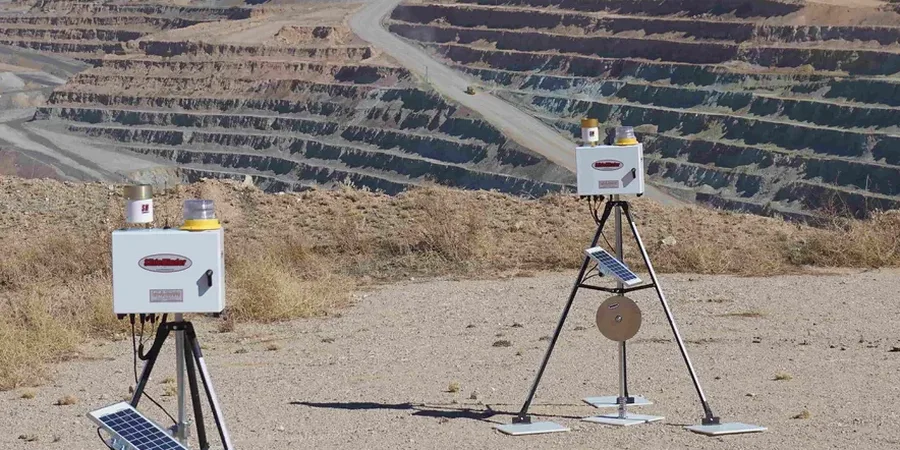
Monitoring provides real-world data on ground movements, groundwater pressures, and support system performance, allowing engineers to validate design assumptions and detect early warning signs of instability. Trigger levels are set in advance so that if movements exceed expected values, contingency measures such as additional support or grouting can be implemented before a failure occurs, keeping workers and the public safe.