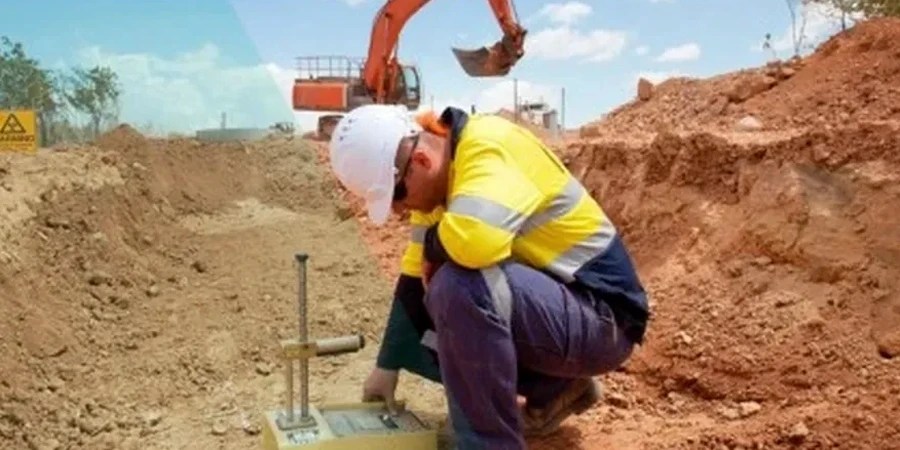
Seismic engineering in Barnsley encompasses a specialised suite of services aimed at assessing, mitigating, and designing against earthquake-induced hazards. While the UK is often perceived as a region of low seismicity, historical events such as the 2008 Market Rasen earthquake, which was felt widely across Yorkshire, underscore the latent risk. This category covers critical disciplines including soil liquefaction analysis, advanced structural protective measures, and site-specific hazard mapping. For a town with a rich industrial heritage and ongoing urban regeneration, integrating seismic resilience is not merely a compliance exercise but a fundamental duty of care to protect lives, infrastructure, and long-term investment.
The geological context of Barnsley directly influences its seismic response. The town sits atop the Pennine Middle Coal Measures, comprising interbedded sandstones, siltstones, and mudstones, overlain in many valley bottoms by thick deposits of Quaternary alluvium and glacial till. These superficial deposits, particularly the saturated silts and sands along the River Dearne corridor, present a specific vulnerability to ground failure. This makes soil liquefaction analysis a non-negotiable first step for any major development, as the cyclic loading from even a moderate tremor can cause a temporary loss of soil strength, leading to foundation settlement and structural distortion.
The regulatory framework governing seismic design in Barnsley derives from the overarching British Standards and Eurocodes, specifically BS EN 1998-1:2004+A1:2013 (Eurocode 8), which is implemented via the UK National Annex. This standard mandates seismic hazard assessment for all permanent structures, with performance requirements scaled according to building importance class. While the peak ground acceleration (PGA) for Barnsley is typically low on a global scale, adherence to these norms is compulsory for obtaining building regulation approval. The requirements are particularly stringent for safety-critical infrastructure, schools, and large residential blocks, where disproportionate collapse or loss of function cannot be tolerated.
Projects that routinely require these specialised seismic services range from the remediation of former mining land to the construction of new high-density housing estates and commercial logistics hubs. The advanced technique of base isolation seismic design is increasingly considered for paramount structures, effectively decoupling the building from ground motion to protect sensitive contents or ensure post-earthquake operability. Furthermore, for large-scale masterplanning, seismic microzonation is an essential strategic tool. It maps variations in ground-shaking potential, landslide susceptibility, and liquefaction risk across a site, enabling planners to position critical infrastructure in the most stable zones and apply targeted ground improvement where necessary.
Yes. Although the UK experiences low-to-moderate seismicity, the Eurocode 8 UK National Annex legally requires a seismic hazard assessment for all permanent structures. Barnsley’s history, including felt tremors from regional events, combined with its complex post-industrial ground conditions, means that ignoring seismic action could lead to uninsurable risks, structural cracking, or foundation failure from even a modest event.
A standard site investigation determines ground properties for foundation design. A seismic microzonation study goes further by mapping how different areas of a site will amplify or dampen earthquake shaking, and identifying specific hazards like liquefaction or landslip susceptibility. This spatial analysis guides masterplanning, ensuring buildings are placed in the most geotechnically stable locations.
Historical coal mining creates a legacy of backfilled shafts, shallow workings, and colliery spoil, which can behave unpredictably during ground shaking. These uncompacted materials are highly susceptible to settlement and, in saturated conditions, can trigger collapse. Seismic design must incorporate rigorous ground investigation to detect voids and assess the dynamic stability of these anthropic deposits to prevent catastrophic subsidence.
A soil liquefaction analysis should be commissioned during the preliminary geotechnical investigation, before the foundation concept is finalised. If the desk study or trial pits reveal saturated granular soils or historic fill below the water table, a specialist analysis is essential. Identifying this hazard early allows for cost-effective ground improvement or deep foundation redesign, avoiding expensive retroactive measures during construction.