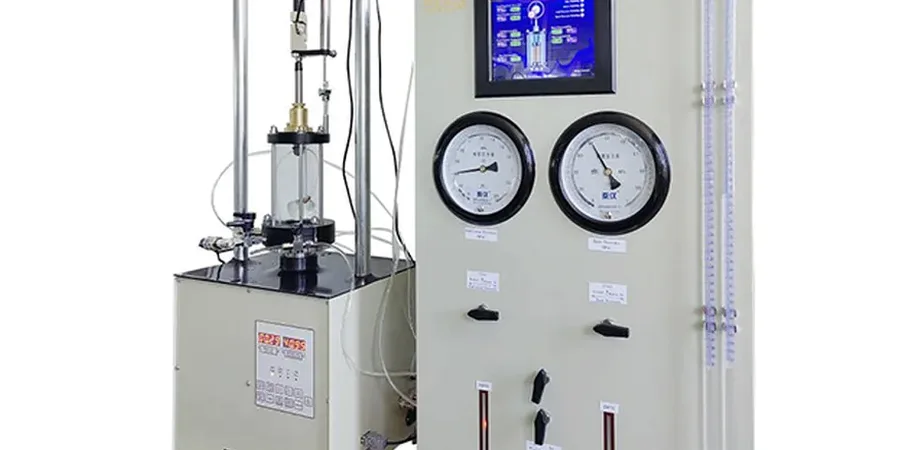
Laboratory testing forms the bedrock of informed geotechnical engineering, transforming site investigation data into the quantifiable parameters needed for safe and compliant design. In Barnsley, a comprehensive laboratory programme goes far beyond simple classification; it provides the fundamental data on strength, compressibility, and chemical aggressivity that dictates foundation type, earthworks specification, and long-term durability. Without this critical phase, projects are exposed to unnecessary risk, relying on visual guesswork rather than the precise measurement of soil and rock behaviour. From a simple housing plot to a major infrastructure corridor, the laboratory is where ground risk is systematically de-risked.
Barnsley’s varied geology demands a rigorous and tailored approach to testing. Much of the town is underlain by the Pennine Middle Coal Measures, comprising cyclical sequences of mudstones, siltstones, and sandstones. These materials, particularly the mudstones, can be prone to rapid deterioration upon exposure and are often associated with complex groundwater conditions. Overlying these solid strata, variable superficial deposits of glacial till and alluvium present their own challenges, including the potential for soft, compressible lenses. A standardised testing suite is rarely sufficient; instead, the laboratory programme must be designed to specifically target these local ground conditions, ensuring that parameters like undrained shear strength in a soft alluvium or the point load index of a weathered sandstone are accurately determined.
The execution of all laboratory work is governed by a strict framework of national standards, ensuring consistency, accuracy, and legal admissibility of results. The primary standard is BS 1377:1990, which details the methods of test for soils for civil engineering purposes, complemented by BS EN ISO 17892 for geotechnical laboratory testing. For the physical characterization of soils, testing such as grain size analysis (sieve and hydrometer) is fundamental, defining the particle size distribution which governs drainage and frost susceptibility. Equally critical is the determination of Atterberg limits, which classify fine-grained soils and assess their volumetric stability. These tests, performed under UKAS-accredited conditions, provide the verified input data required for Eurocode 7 (BS EN 1997) design.
The requirement for specialist laboratory testing spans the entire spectrum of construction and civil engineering projects in Barnsley. A residential developer undertaking a site investigation on a former colliery site relies on chemical testing for pH and sulfates to specify sulfate-resisting concrete for foundations. A highway engineer designing a new link road uses compaction-related tests, such as the Proctor test and California Bearing Ratio (CBR), to validate the performance of locally won fill materials. Similarly, an environmental consultant assessing a brownfield site for redevelopment depends on contamination suites to inform a remediation strategy. In every case, the laboratory’s role is to generate the reliable data that underpins cost-effective and safe design decisions.
Laboratory testing is essential to move beyond visual descriptions and quantify the actual engineering properties of the ground. In Barnsley, where variable Coal Measures strata and glacial deposits are common, tests on strength, compressibility, and chemical composition provide the definitive data required for safe foundation design, earthworks specification, and to satisfy building control requirements under Eurocode 7.
The primary standard is BS 1377, which details methods of test for soils. This is complemented by BS EN ISO 17892 for geotechnical laboratory testing. These standards ensure consistency and accuracy, and adherence to them is typically a requirement of the UK Specification for Ground Investigation, often mandated by clients and regulators to ensure valid, defensible results.
The duration depends entirely on the scope and complexity of the testing suite. Simple classification tests like moisture content and plasticity can be completed within a few days. However, tests requiring longer curing or consolidation stages, such as triaxial effective strength tests or oedometer consolidation tests, can extend the programme to two weeks or more from sample receipt.
A factual report presents only the measured data and test results without comment. An interpretative report, typically prepared by a geotechnical engineer, analyses this data in the context of the site’s geology. It derives design parameters, comments on the suitability of materials, and provides recommendations for foundation design or earthworks, turning raw data into actionable engineering advice.