Together, we solve the challenges of tomorrow.
LEARN MORE →Ground investigation in Barnsley forms the essential first step in any construction or civil engineering project, providing the critical data required to design safe, stable and cost-effective foundations. This category encompasses a comprehensive range of site characterisation techniques aimed at understanding the physical, chemical and mechanical properties of the ground beneath a proposed development. From identifying buried obstructions and assessing contamination risks to determining bearing capacity and settlement potential, a properly scoped investigation mitigates the risk of unforeseen ground conditions that can lead to costly delays, structural failure or environmental harm. In a borough with Barnsley's complex industrial legacy and varied topography, the importance of robust site investigation cannot be overstated.
The local geology of Barnsley is dominated by the Carboniferous Coal Measures, comprising interbedded sandstones, siltstones, mudstones and historically significant coal seams. This stratigraphy is overlain in many areas by glacial till and fluvioglacial deposits from the Quaternary period, which can exhibit highly variable thickness and engineering behaviour. The region's extensive mining history introduces additional complexity, with the potential for unrecorded mine workings, shafts and adits posing significant collapse and subsidence risks. Furthermore, alluvial deposits along the River Dearne and its tributaries can present soft, compressible soils with high groundwater tables, while the sandstone beds of the Pennine Lower Coal Measures may offer good bearing capacity but are susceptible to weathering. Understanding this geological mosaic is fundamental to any investigation strategy.
All ground investigation work in Barnsley must comply with the stringent requirements of British Standards, most notably BS 5930, which provides the code of practice for site investigations, and BS EN 1997 (Eurocode 7) covering geotechnical design. These are further supported by BS 10175 for the investigation of potentially contaminated sites and BS 1377 for soil testing methods. The Planning Authority will typically require a Phase 1 desk study and a Phase 2 intrusive investigation to discharge planning conditions, particularly for sensitive developments. The Coal Authority also mandates specific procedures for investigating and treating coal mining risks, with their permitting process being a critical consideration for any site within the defined coalfield areas. Adherence to these standards ensures that data collected is defensible, comparable and suitable for design.
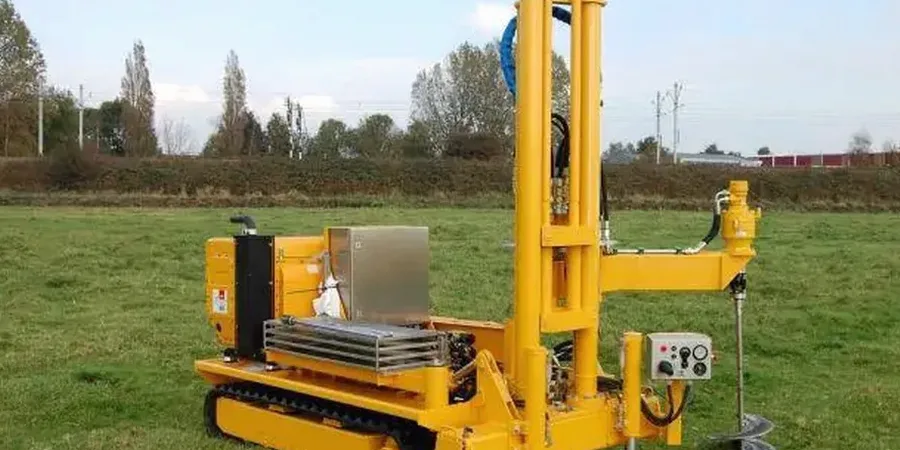
A wide spectrum of projects across Barnsley demands thorough ground investigation. Residential developments, from small infill plots to large greenfield estates, require assessment of foundation solutions and ground gas protection measures. Commercial and industrial schemes, often located on former brownfield land, necessitate rigorous contamination testing and remediation strategies. Infrastructure projects, such as road widening, drainage schemes and the construction of sustainable urban drainage systems (SuDS), rely on accurate ground models for earthworks design and long-term performance. Even smaller domestic extensions can encounter problematic ground, making a targeted investigation a prudent investment. Techniques such as the CPT (Cone Penetration Test) are frequently deployed to provide continuous profiles of soil behaviour, offering a rapid and cost-effective complement to traditional borehole drilling and laboratory testing.
A Phase 1 investigation is a desk study that collates historical maps, geological records and environmental data to create a preliminary conceptual site model and identify potential hazards. A Phase 2 investigation is the intrusive phase, involving physical sampling through boreholes or trial pits to verify the ground conditions, test for contamination and determine geotechnical parameters for design.
A ground investigation is typically required as a planning condition for most new developments, from single dwellings to major commercial schemes. It is mandated to demonstrate that ground-related risks, including contamination, mining hazards and foundation stability, have been adequately assessed in accordance with BS 5930, BS 10175 and local planning policy, particularly within Coal Authority development high-risk areas.
The duration depends on the project scale and complexity. A Phase 1 desk study can be completed in one to two weeks. A Phase 2 intrusive investigation, including mobilisation, drilling, in-situ testing and laboratory analysis, generally takes between three and six weeks from instruction to the delivery of the final factual and interpretative report.
Indicators include historic maps showing mine entries, shallow depressions in the ground surface, cracking in existing structures and the presence of coal seam outcrops. A specialist mining risk assessment, often involving rotary drilling to probe for voids and a Coal Authority mining report, is essential to confirm the presence and condition of any shallow workings before construction proceeds.