Together, we solve the challenges of tomorrow.
LEARN MORE →In-situ testing forms the backbone of reliable geotechnical investigation across Barnsley, providing engineers and contractors with direct measurements of ground conditions without the disturbance associated with sampling and laboratory work. This category encompasses a suite of field-based techniques designed to evaluate soil strength, density, permeability, and deformation characteristics in their natural state. For a town undergoing significant regeneration—from the Glass Works redevelopment to new housing estates on former industrial land—understanding the ground truth beneath the surface is not just best practice but a regulatory and safety imperative. In-situ methods bridge the gap between desk studies and foundation design, reducing uncertainty and often unlocking more efficient construction solutions.
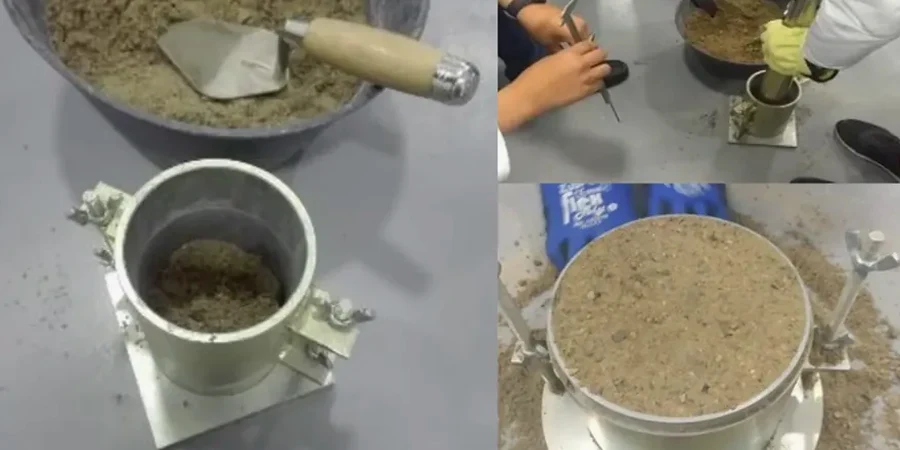
Barnsley’s geology presents a varied and sometimes challenging profile that makes in-situ testing particularly valuable. The town sits predominantly on the Pennine Middle Coal Measures, comprising interbedded sandstones, siltstones, mudstones, and historic coal seams. Overlying these solid strata, glacial till and pockets of alluvium along the River Dearne corridor introduce variability in bearing capacity and drainage. Crucially, the legacy of deep and shallow mining across the borough leaves a network of voids and collapsed workings that demand rigorous ground investigation. A field density test (sand cone method) becomes essential where engineered fill or reworked ground must achieve specified compaction, while dynamic probing and plate load tests help map the extent of competent strata and identify zones of softening or collapse. Without in-situ verification, assumptions based purely on borehole logs can miss critical local anomalies.
UK practice is governed by a robust framework of standards that dictate how in-situ testing should be specified, executed, and interpreted. Eurocode 7 (BS EN 1997-2:2007) sets out the overarching principles for ground investigation, requiring that field tests be selected based on the ground conditions and the limit state being assessed. This is supplemented by BS 5930:2015, the code of practice for ground investigations, which provides detailed guidance on methods ranging from the standard penetration test (SPT) to cone penetration testing (CPT) and pressuremeter tests. In Barnsley, where coal mining risks are a material consideration, the Coal Authority’s permitting requirements often mandate specific in-situ verification—particularly for sites within Development High Risk Areas. Compliance with these standards ensures that data collected feeds reliably into geotechnical design reports and foundation recommendations accepted by building control bodies.
The types of projects driving demand for in-situ testing in Barnsley are diverse. Residential developers opening up greenfield or brownfield sites require plate load tests to confirm allowable bearing pressures for traditional strip foundations, while commercial schemes like distribution centres along the M1 corridor often rely on CPT profiling to optimise pile design. Highway improvements under the Barnsley, Doncaster, and Rotherham Joint Infrastructure Strategy depend on accurate CBR values obtained in the field. Even smaller-scale works—retaining walls, drainage trenches, or basement excavations—benefit from rapid and cost-effective tests such as the field density test (sand cone method) to verify backfill compaction. In every case, the data gathered informs safer, more economical designs tailored to the actual ground response rather than conservative textbook assumptions. The shift toward in-situ techniques reflects an industry-wide recognition that the ground is the most variable construction material, and testing it in place is the surest path to managing that variability.
In-situ testing measures soil and rock properties directly in the ground, preserving natural stress states, moisture conditions, and fabric that laboratory samples often lose through disturbance. In Barnsley, where glacial till and coal measure rocks exhibit fissuring and variable weathering, field tests like the SPT or plate load test capture the mass behaviour of the ground, providing more representative design parameters and reducing the risk of overlooking weak zones that small-diameter borehole cores might miss.
For mining-affected ground, a combination of dynamic probing and rotary drilling with in-situ standard penetration testing is typically recommended. Dynamic probes can identify shallow voids and backfilled shafts through sudden drops in blow count, while SPTs provide disturbed samples for logging alongside penetration resistance. Where precise foundation design is needed, pressuremeter tests offer stiffness and strength data without the uncertainty introduced by sample disturbance in fractured coal measure strata.
BS 5930:2015 and BS EN 1997-2:2007 set out the selection, execution, and reporting requirements for all common in-situ tests used in the UK. These standards ensure consistency and allow results to be compared with published correlations. In Barnsley, adherence is typically checked through planning conditions and building control submissions, particularly where the Coal Authority requires a ground investigation report demonstrating that mining risks have been adequately characterised and mitigated.
In-situ testing should be integrated from the preliminary ground investigation phase, typically following a desk study and walkover survey. Early testing helps define ground variability and target subsequent intrusive works. For Barnsley developments on brownfield land or within coal mining risk areas, early engagement allows results to shape foundation strategy and earthworks specifications before detailed design commences, avoiding costly redesign or construction delays.